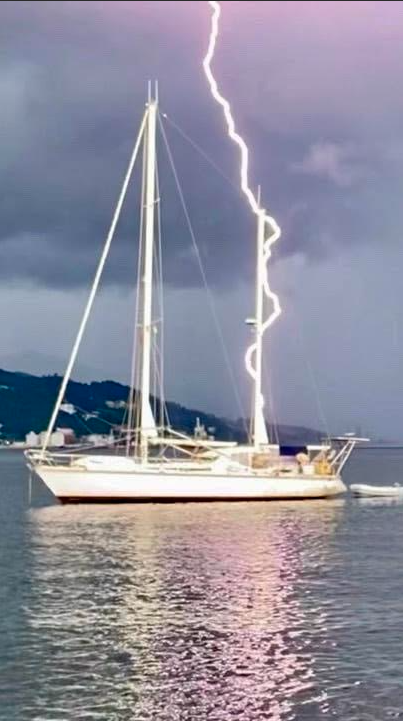
Ensure you have a comprehensive Lightning Protection System.
Lightning (yes – again!)
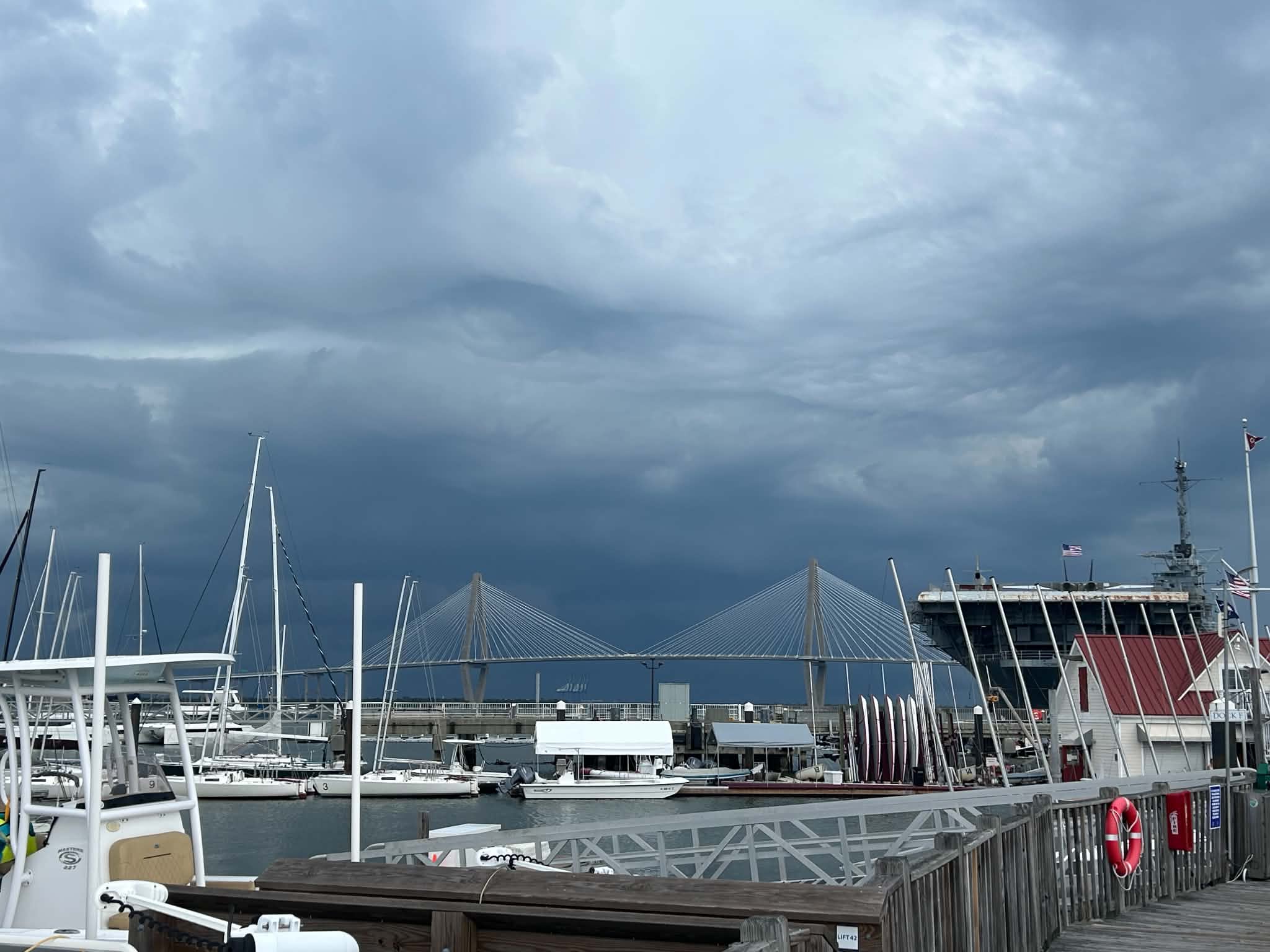
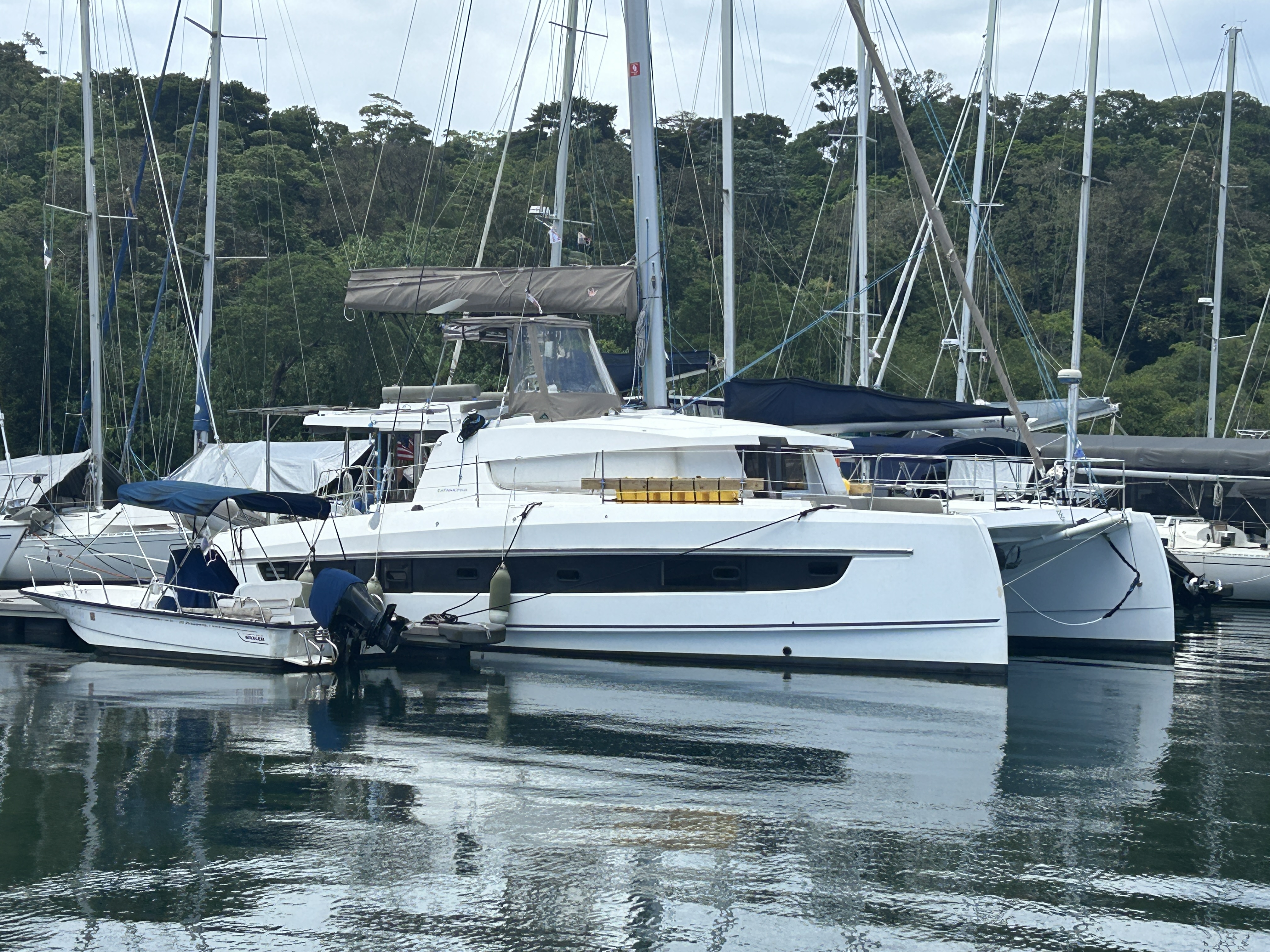
This week I was supposed to be sailing a beautiful Leopard 44’ north with the new owners. Tragically, it was struck by lightning alongside in Charleston just 4hrs after they signed the final papers. Although insurance is now involved – this was terrible luck, and a sad start to their sailing life.
As I understand it – there are no proven ways to completely’ shrug off’ a lightning strike, so I’m covering here the basics of avoidance and ‘minimization of damage’ from lightning, and using Word pages below for improved formatting.
As ever, if I can assist you with moving your boat, either accompanied/acquaint or unaccompanied, on the East Coast from Canada to South America - please give me a ring and I look forward to the discussion!
Rupert F-B
Ensure you have a comprehensive Lightning Protection System.
Provide a path with as little resistance as possible that conducts a lightning strike to the water.
- Lightning conductor at the top of the mast
- Heavy gauge continuous wire running from the masthead to the water
- A large underwater external grounding plate (Dynaplate) or metal hull.
- Bonding System : All major metal objects (engine, shrouds, chainplates, large appliances) should be electrically tied together.
Storm Precautions as lightning approaches:
- Try and get away from it – seek shelter: marina, cove. Avoid open water.
- Disconnect appliances and electrical systems where possible
- Use microwave or galley oven as a Faraday Cage for as many handheld devices as you can fit into it
- Stay below decks in cabin, away from metal objects like engine, shrouds, stanchions etc.
‘Bottle brush’-typelightning dissipatorsare claimed by sellers to make a boat invisible to lightning by bleeding off static electrical charge as it builds up.
The theory rests upon the concept that charged electrons from the surface of the earth can be made to congregate on a metal point, where the physical constraints caused by the geometry of the point will result in electrons being pushed off into the surrounding atmosphere via a ‘lightning dissipator’ that has not just one point, but many points.
It is worth noting that the concept has met with a storm of derision from many leading academics who have argued that the magnitude of the charge that can be dissipated by such a device is insignificant compared to that of both a cloud and individual lightning strikes.
This is a short introduction to Lightning Protection. There is more to it than described here and I recommend:
- ttps://www.yachtingmonthly.com/gear/sailing-in-lightning-how-to-keep-your-yacht-safe-87883
- https://www.practical-sailor.com/blog/lightning-protection-the-truth-about-dissipators/
- https://www.boatus.com/expert-advice/expert-advice-archive/2016/january/modern-lightning-protection-on-recreational-watercraft